Quick Menu
Plagiarism & Restaction Policy
Reference Tool
Plagiarism Checker Tool

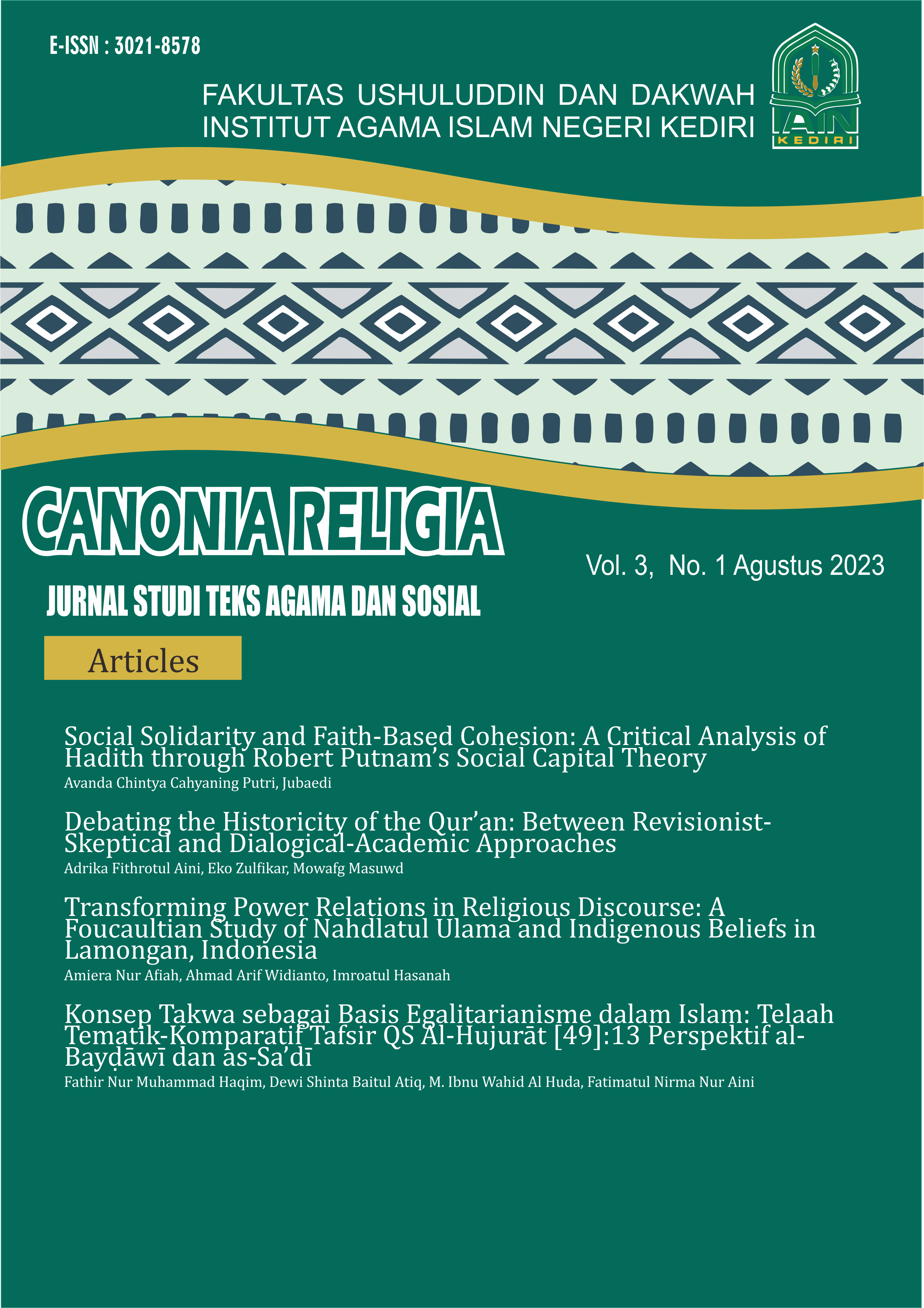
Vol. 3 No. 1 (2025) features eight articles authored by 23 scholars from four countries: Australia, Libya, the United Kingdom, and Indonesia. The articles explore a wide range of themes, such as esoteric Qur’anic exegesis and human prophetic concepts, Qur’anic perspectives on mortality and mindfulness, ecological crises through Qur’anic interpretation, the interrelation of Islamic tawakkul and Stoic philosophy, social solidarity and faith-based cohesion, debates on the historicity of the Qur’an, transformations of power relations in religious discourse, and the role of piety as a basis for egalitarianism in Islam. The Indonesian contributors represent several provinces, including Aceh, East Java, and Central Java, reflecting broad academic diversity. This geographical and thematic diversity highlights the journal’s commitment to bridging Islamic scholarship with contemporary social, cultural, and philosophical challenges
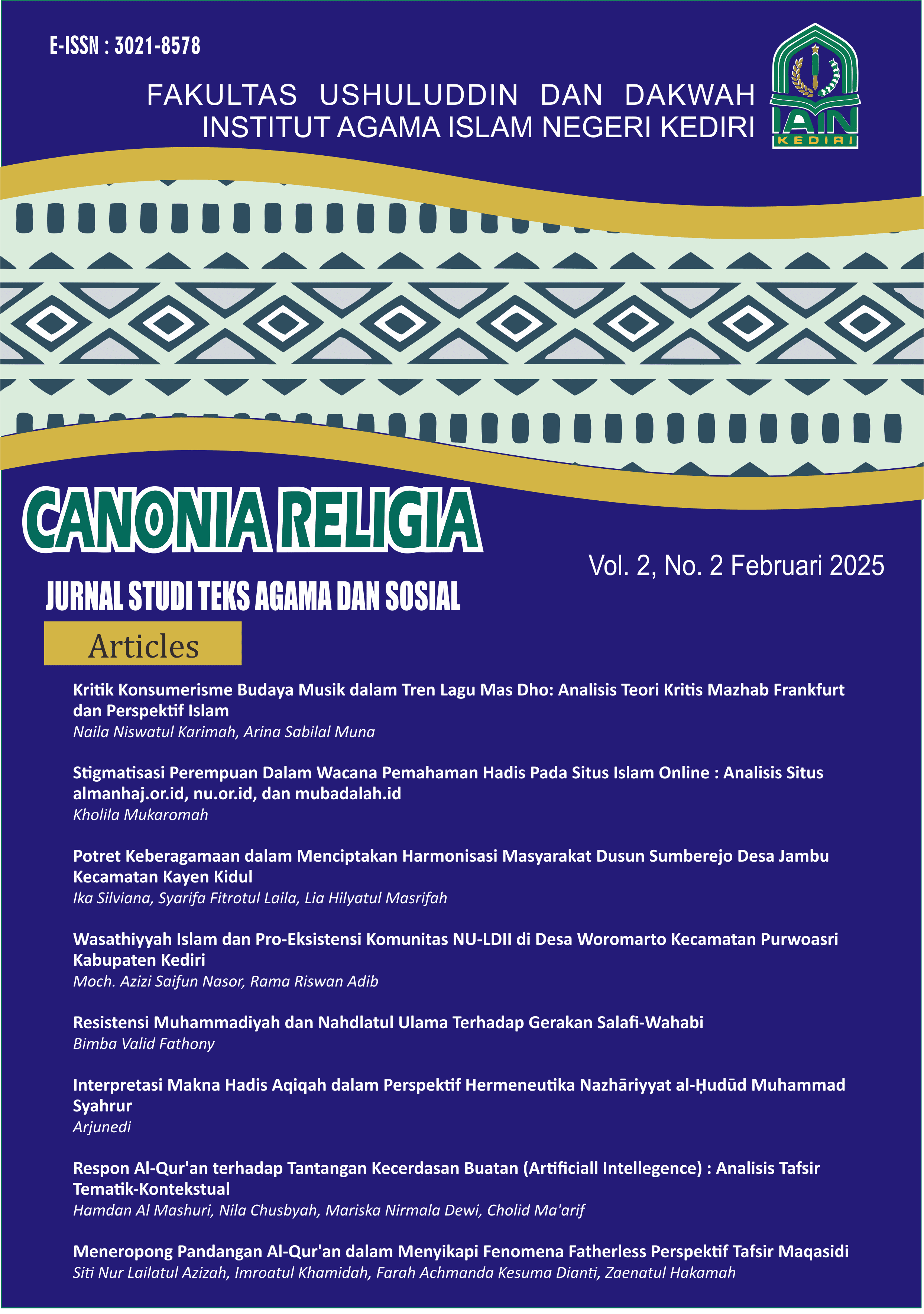
Vol. 2 No. 2 (2024) features eight articles authored by 23 scholars from three countries: Australia, Turkey, and Indonesia. The Indonesian contributors represent several provinces, including East Java, Yogyakarta, and North Sulawesi, reflecting broad academic diversity. The articles explore a wide range of themes, such as religious expression and communal harmony, Qur’anic responses to Artificial Intelligence in the context of Indonesia Emas 2045, resistance of Islamic organizations to Salafi-Wahhabi movements, and wasathiyyah in intercommunal relations. Other studies reinterpret the ḥadīth of ‘aqīqah through Shahrur’s hermeneutics, critique cultural consumerism in popular music, analyze online discourses on women’s creation, and promote paternal roles through maqāṣidī exegesis. This geographical and thematic diversity highlights the journal’s commitment to bridging Islamic scholarship with contemporary social, cultural, and technological challenges.
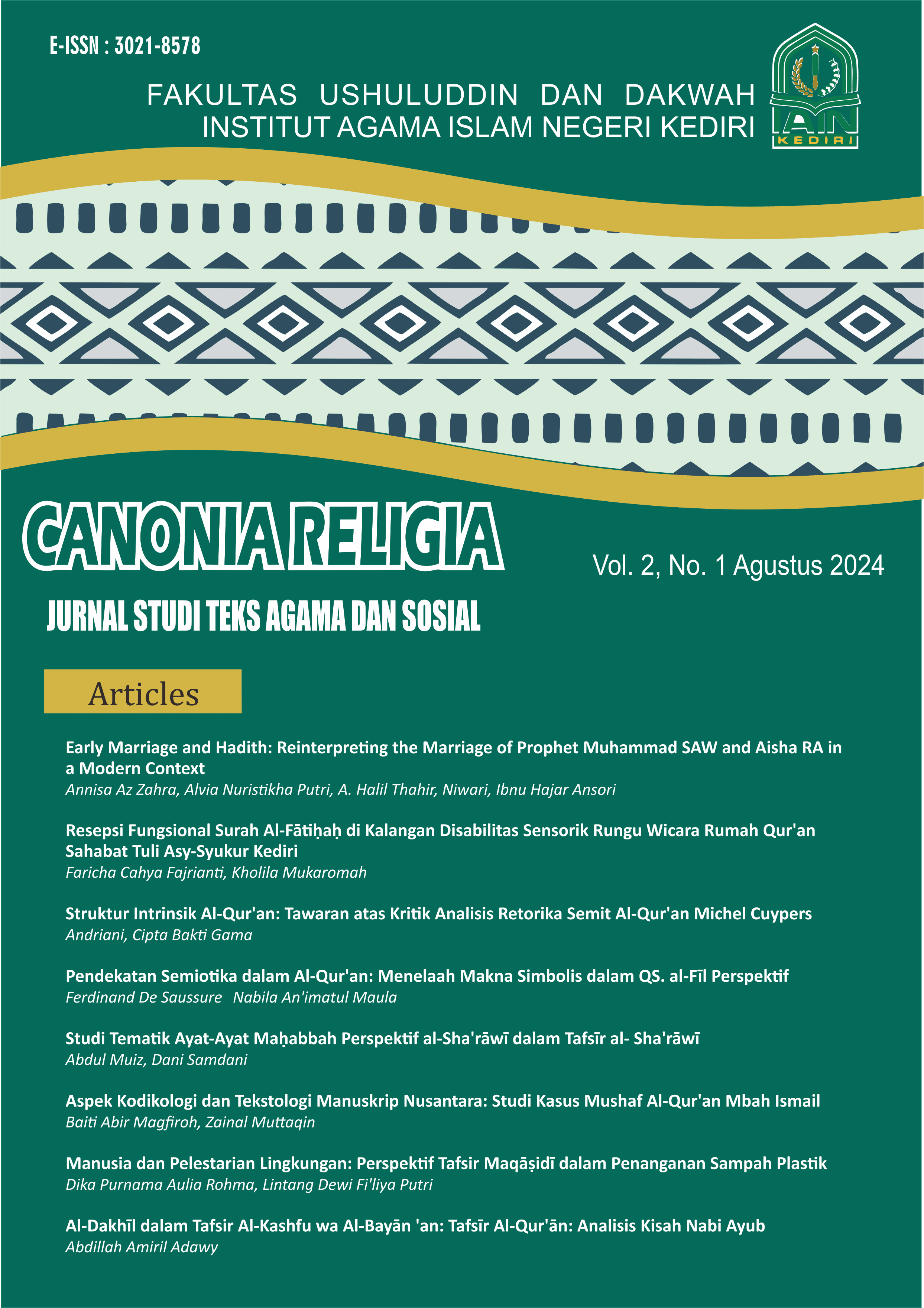
Vol. 2 No. 1 (2024) features eight articles authored by 15 scholars from two countries, the United Arab Emirates and Indonesia, reflecting substantial geographical and institutional diversity across Indonesian provinces such as East Java, Jakarta, and Yogyakarta. This issue covers themes including the modern reinterpretation of Prophet Muhammad SAW and Aisha RA’s marriage, the functional reception of Surah al-Fātiḥaḥ for individuals with hearing impairments, structural and semiotic analyses of the Qur’an, thematic exegesis on maḥabbah verses, examinations of al-dakhīl in Prophet Ayyub’s story, maqāṣidī exegesis on environmental preservation, and codicological studies of Nusantara Qur’anic manuscripts. The inclusion of authors from two countries underscores the journal’s growing international orientation and its commitment to bridging classical Islamic textual scholarship with contemporary intellectual, social, and ecological discourses.
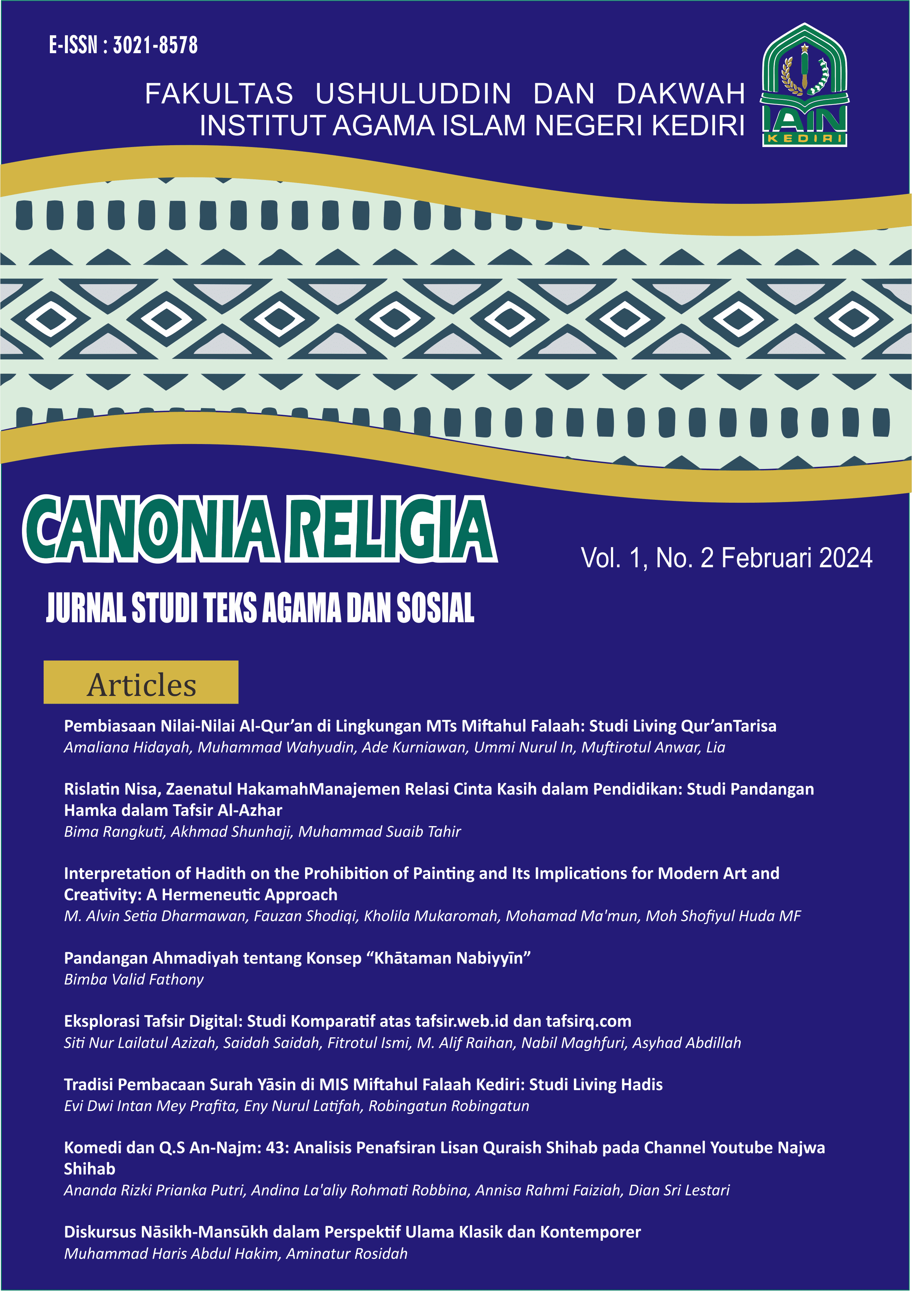
Vol. 1 No. 2 (2024) features eight articles authored by 29 scholars from two countries, namely Libya and Indonesia, with contributors representing multiple Indonesian provinces such as East Java, Yogyakarta, and Jakarta. This issue highlights both field-based and theoretical approaches, addressing topics such as the habituation of Qur’anic values in educational settings, ritual recitations, reinterpretations of Hadith on art and creativity, digital tafsir platforms, and classical exegesis debates. The inclusion of an international contributor from Libya, alongside diverse provincial representation from Indonesia, reflects the journal’s expanding academic network and its growing capacity to connect local religious practices with global scholarly discourse in Qur’anic and Hadith studies.
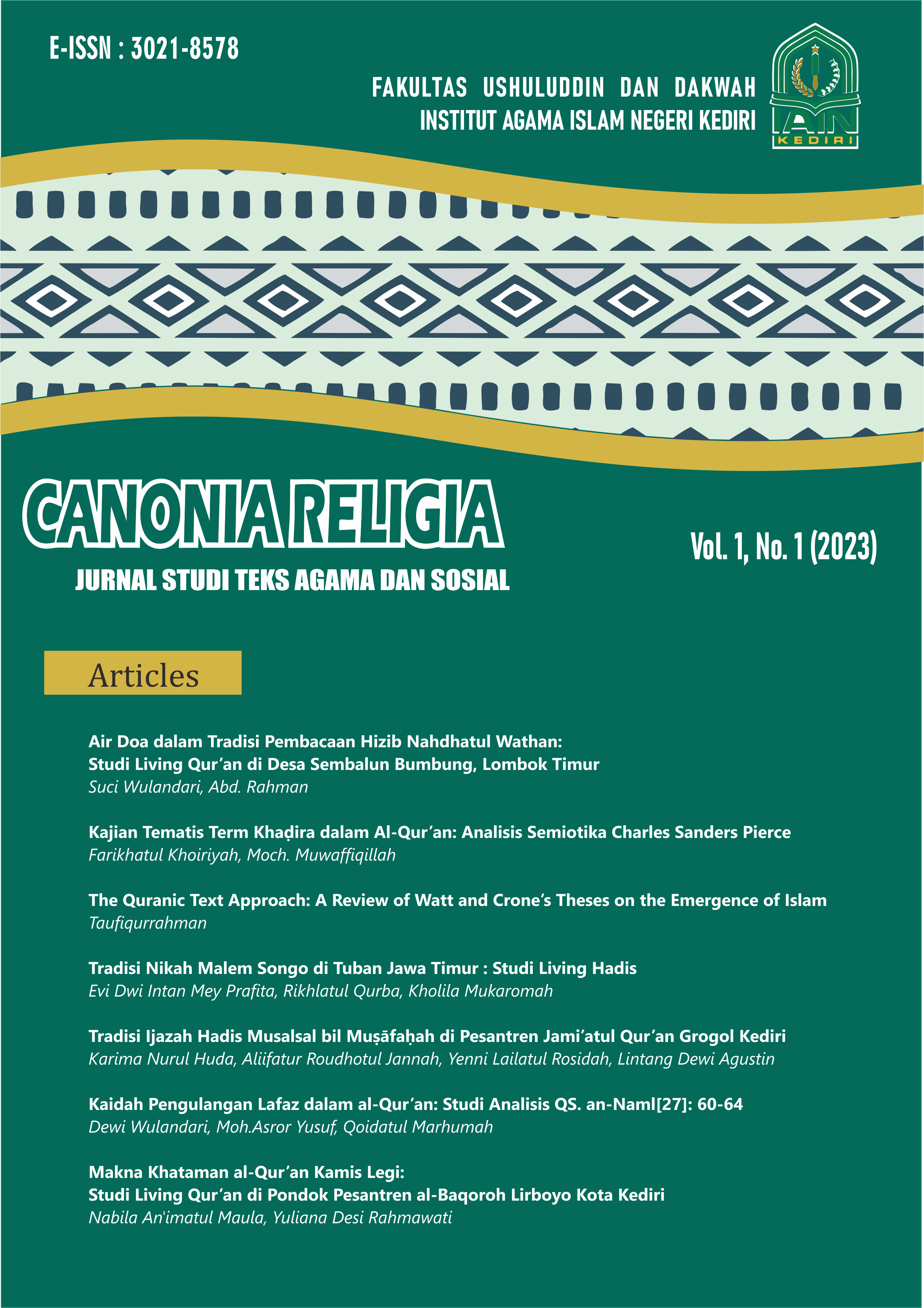
Vol. 1 No. 1 (2023) of Canonia Religia comprises eight articles authored by 18 scholars based in Indonesia, with contributors from provinces including East Java and West Nusa Tenggara. The articles balance ethnographic studies of local Qur’anic and Hadith practices, such as ritual recitations and traditional marriage customs, with theoretical analyses, including semiotic studies of Qur’anic terminology and critical reviews of historical interpretations. This combination reflects the journal’s initial effort to connect lived religious traditions with rigorous academic inquiry while highlighting regional diversity within Indonesia.
Transforming Religious Exegesis in the Digital Era:
Integrating Digital Technologies and Artificial Intelligence in Religious Studies
Discussion Summary
Environmental Discourse from Turāṡ to Global Challenges:
The Dialectic of Classical and Contemporary Islamic Studies in Ecotheological Thought
Discussion Summary
Mutually Strengthening Religions:
Reading Islam through a Mubadalah Perspective
Discussion Summary
Stoicism and Islamic Philosophy:
The Ethics of Resilience in Classical and Contemporary Islamic Thought
Discussion Summary
________________
Canonia Religia
Sunan Ampel Street No.7, Ngronggo, Kediri, East Java, 64129, Indonesia.
Map Coordinate: Lat -7.8467028" Long 112.0248149,21"
Canonia Religia by IAIN Kediri
Licensed under a Creative Commons Attribution 4.0 International License